Blogs
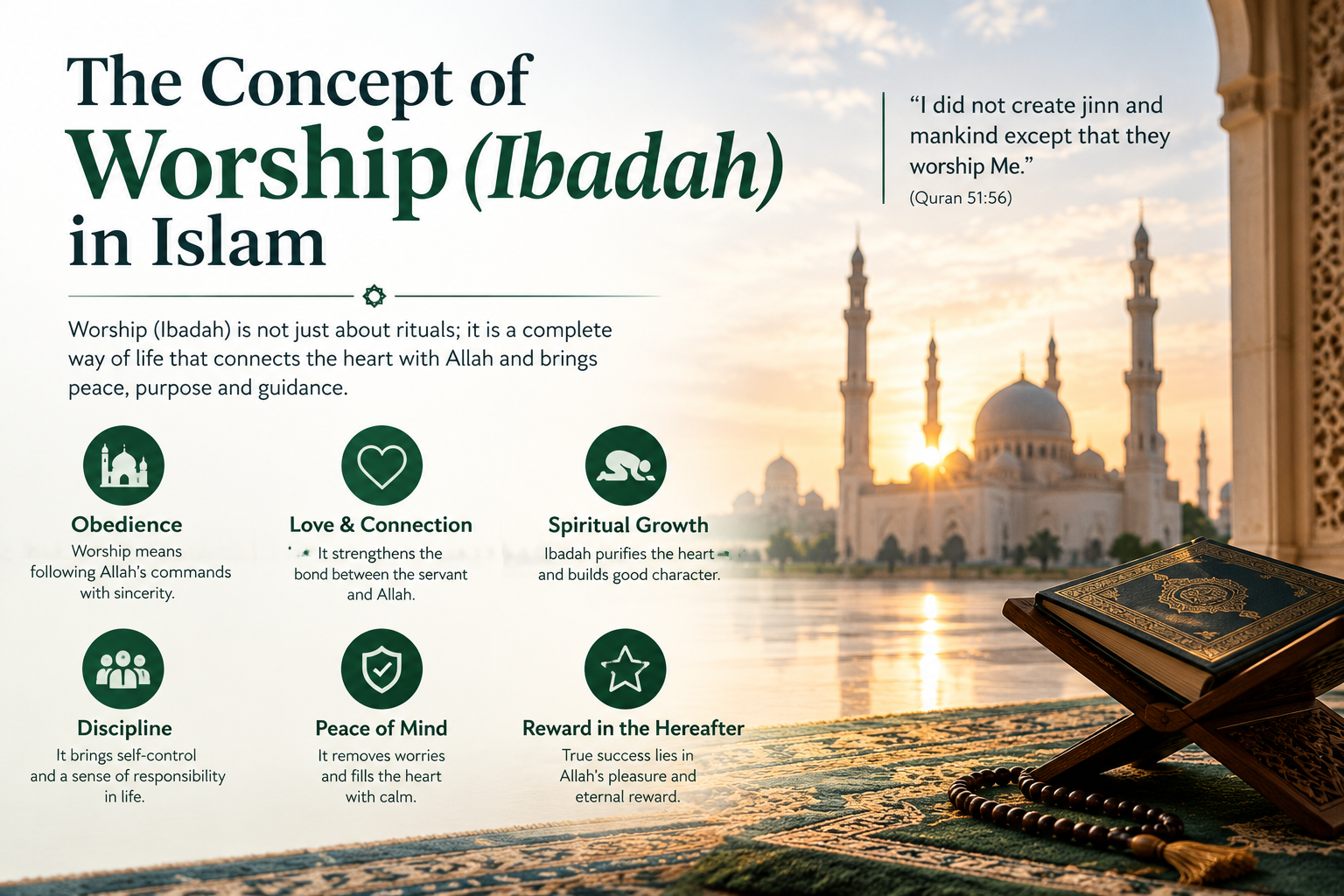
The Concept of Worship (Ibadah) in Islam
September 30, 2026
1. The Meaning of Ibadah (Worship)
The Arabic word Ibadah (عبادة) is derived from the root abd (عبد), meaning "slave" or "servant." Linguistically, Ibadah signifies humility, submission, and obedience. In Islamic terminology, it encompasses everything that Allah loves and is pleased with — from beliefs, words, and actions of the heart to physical deeds performed with sincere devotion.
📖 Quranic Definition: Allah says: "And I did not create the jinn and mankind except to worship Me." (Quran, Adh-Dhariyat 51:56)
Ibadah is not limited to ritual acts; it is a comprehensive concept that covers a Muslim's entire existence. Every action performed with the intention of seeking Allah's pleasure becomes an act of worship.
2. The Purpose of Creation
Islam teaches that the primary purpose of human existence is to recognize and worship Allah. This understanding gives meaning and direction to every aspect of life. Worship in Islam is both an obligation and a privilege — it is the path to spiritual fulfillment and eternal success.
The Prophet Muhammad ﷺ said: "Indeed, Allah has rights over you..." (Sahih al-Bukhari). Fulfilling these rights through worship brings peace to the heart and harmony to society.
3. Types of Worship in Islam
A. Worship of the Heart (Inner Worship)
- Faith (Iman): Belief in Allah, His angels, books, messengers, the Day of Judgment, and divine decree
- Sincerity (Ikhlas): Performing deeds solely for Allah's pleasure
- Love (Mahabbah): Loving Allah and His Messenger more than anything else
- Trust (Tawakkul): Reliance upon Allah in all matters
- Fear (Khawf): Fear of Allah's displeasure that prevents sin
- Hope (Raja): Hoping for Allah's mercy and reward
- Patience (Sabr): Endurance in obedience and through trials
- Gratitude (Shukr): Thanking Allah for all blessings
B. Physical Worship
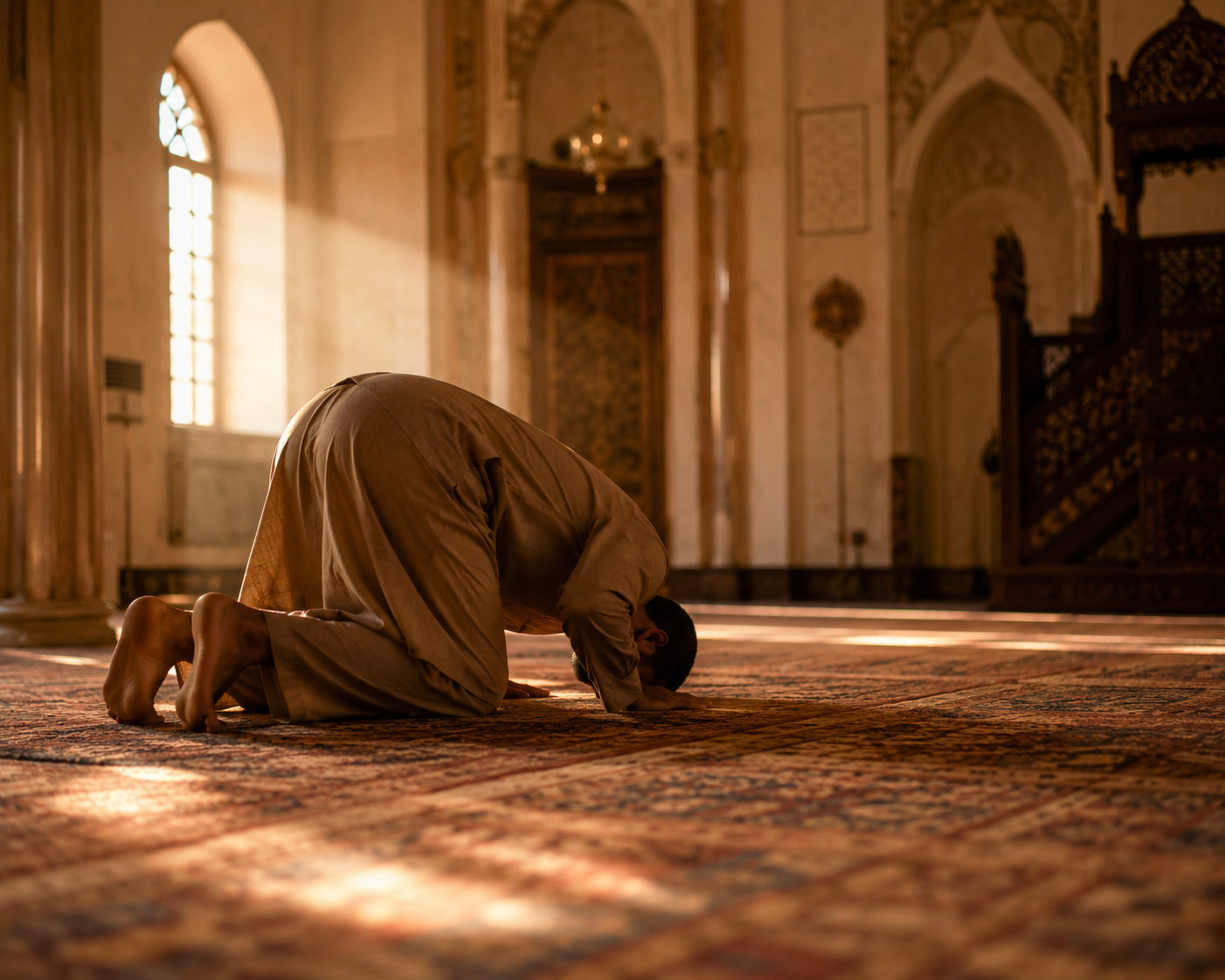
- Salah (Prayer): The five daily prayers, the pillar of faith
- Sawm (Fasting): Fasting during Ramadan and voluntary fasts
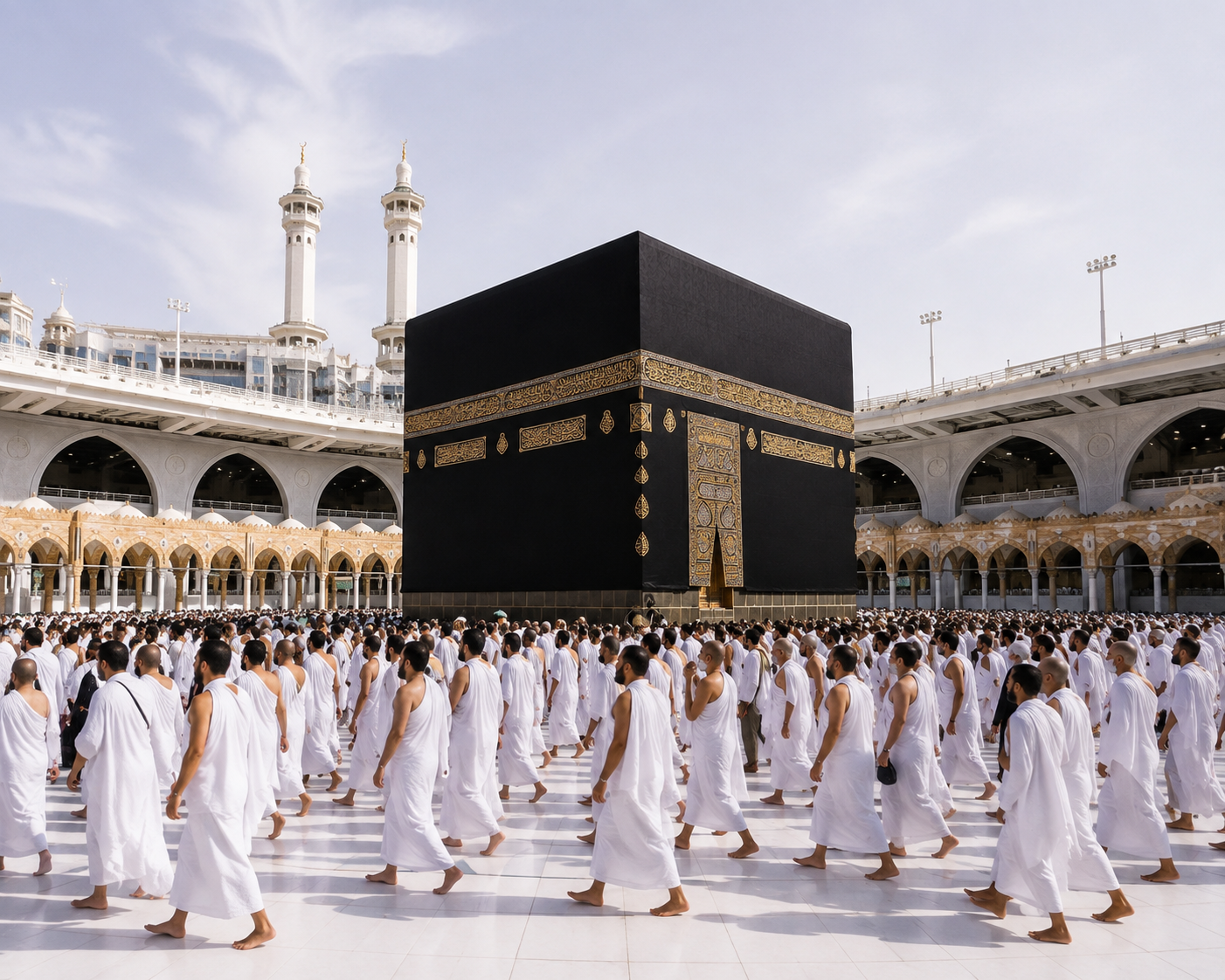
- Hajj (Pilgrimage): Pilgrimage to Makkah for those who are able
- Recitation of Quran: Reading, reflecting, and acting upon Allah's words
- Dhikr (Remembrance): Remembering Allah through supplications and glorifications
C. Financial Worship
- Zakat (Obligatory Charity): 2.5% of savings given to those in need
- Sadaqah (Voluntary Charity): Any form of giving for Allah's sake
- Spending on family: Providing for one's dependents
D. Social Worship
- Enjoining good and forbidding evil
- Visiting the sick
- Maintaining family ties (Silat ar-Rahim)
- Being kind to neighbors
- Spreading peace (Salam)
- Honoring parents
4. Conditions for Accepted Worship
For any act to be considered valid worship in Islam, two fundamental conditions must be met:
- Sincerity (Ikhlas): The action must be performed purely for Allah's sake, free from showing off or seeking praise.
- Following the Sunnah: The action must be in accordance with the teachings of Prophet Muhammad ﷺ.
The Prophet ﷺ said: "Whoever does an action that is not in accordance with this matter of ours (Islam) will have it rejected." (Sahih Muslim)
5. The Comprehensive Nature of Ibadah
One of the most beautiful aspects of Islam is that it transforms mundane, everyday activities into acts of worship. Eating, sleeping, working, and even interacting with others become worship when accompanied by the right intention (niyyah).
The Prophet ﷺ said: "Even your meeting with your spouse is charity." The Companions asked, "O Messenger of Allah, is there reward for us in our desires?" He replied: "Do you not see that if he were to fulfill his desire in a forbidden way, he would be sinning? Likewise, if he fulfills it in a permissible way, he will be rewarded." (Sahih Muslim)
This teaching elevates the entire human experience. A Muslim can earn reward while enjoying lawful pleasures, provided the intention is to seek Allah's pleasure — to stay chaste, to strengthen the family bond, to produce righteous offspring.
6. Sincerity (Ikhlas) — The Heart of Worship
Sincerity is the soul of worship. Without it, even the most impressive deeds are hollow and unacceptable. Allah says: "So whoever hopes for the meeting with his Lord, let him do righteous work and not associate anyone in the worship of his Lord." (Quran, Al-Kahf 18:110)
The early scholars defined Ikhlas as: "Purifying one's actions from the attention of people." It means that the only audience a Muslim seeks is Allah. This purity of intention protects the believer from showing off (riya), which is a major sin.
7. Levels of Worship
Islamic scholars classify worship into three levels, based on the spiritual state of the believer:
Level 1: Worship of the General Believer
Performed out of hope for reward and fear of punishment. This is the foundation and is perfectly acceptable.
Level 2: Worship of the Devoted
Performed out of love, gratitude, and yearning for Allah. The believer seeks closeness to Allah beyond just reward.
Level 3: Worship of the Spiritually Elevated (Ihsan)
Worshipping Allah as if you see Him, and knowing that He sees you. This is the highest level of faith, as described by the Prophet ﷺ in the famous hadith of Jibreel.
8. Worship in Daily Life
Islam integrates worship into every moment. Here are examples of how daily activities become worship:
- Working honestly to provide for your family = worship
- Smiling at your brother = charity
- Removing a harm from the road = charity
- Sleeping with the intention to wake up for Fajr = worship
- Eating with gratitude and moderation = worship
- Greeting others with Salam = worship
- Seeking knowledge = worship
9. Common Misconceptions About Worship in Islam
Myth 1: Worship is only rituals
Reality: While rituals are essential, worship in Islam encompasses every aspect of life — ethics, business transactions, family relations, and social interactions.
Myth 2: Worship is burdensome
Reality: Islamic worship is designed for human nature. It brings peace, discipline, and purpose. Allah says: "Allah intends ease for you, not hardship." (Quran, Al-Baqarah 2:185)
Myth 3: Worship is only for this world
Reality: Worship in this life is the seed for eternal bliss in the Hereafter. The ultimate reward is Paradise — the vision of Allah, which is the greatest pleasure.
10. Conclusion
The concept of worship (Ibadah) in Islam is vast, beautiful, and deeply meaningful. It transforms a Muslim's entire life into a continuous act of devotion. Far from being confined to mosques and prayer mats, worship flows through every action, word, and thought — when done with sincere intention to please Allah.
By understanding Ibadah in its true sense, a Muslim realizes that every moment is an opportunity to draw closer to Allah. From the morning prayer to the nightly sleep, from earning a living to raising a family — all become paths to paradise when traveled with faith and sincerity.
💡 Key Takeaway: The most beloved worship to Allah is that which is done consistently, sincerely, and in accordance with the Sunnah — whether it is a small deed or a great one.
May Allah accept our worship and grant us sincerity. Ameen.