Blogs
Women in Islam: Rights, Roles, and Empowerment
August 6, 2026
Women in Islam: Rights, Roles, and Empowerment
A first-year law student in Lahore once told her professor she wanted to specialize in inheritance disputes, because her own grandmother never received her share of the family land. Her professor's answer surprised her. Islamic law had already guaranteed that share fourteen centuries ago. The gap wasn't in the religion. It was in how the law was applied. This distinction, between Islamic teaching and cultural practice, sits at the center of most conversations about women in Islam today.
What Islam Says About Women's Status
The Quran addresses men and women as spiritual equals, both accountable for their own actions and both promised the same reward for righteousness. Chapter 33, verse 35 lists qualities such as patience, charity, and remembrance of God, applying identical praise to believing men and believing women in the same breath.
This spiritual equality does not always translate into identical social roles, and that distinction fuels much of the ongoing debate around women in Islam. Scholars broadly agree on the theological point of equal worth. Where discussion continues is how specific rulings on marriage, inheritance, and public roles should be applied in modern contexts, and how much of current practice reflects religious text versus local culture.
Women's Rights in Islam: The Core Framework

Islamic teaching outlines a specific set of rights for women that, in the seventh century, were significantly ahead of surrounding legal systems. Several of these remain directly relevant today.
Property and inheritance rights. Women in Islam have always had the legal right to own, inherit, and manage property independently, without needing a male guardian's permission to do so. The Quran sets fixed inheritance shares for daughters, wives, and mothers, guaranteeing them a portion of an estate at a time when many legal systems gave women no inheritance rights at all.
Marriage rights. A Muslim woman must consent to her own marriage. A nikah performed without her agreement is not considered valid under mainstream Islamic jurisprudence. She also retains the right to a mahr, a mandatory gift from the husband that remains her personal property.
Right to work and own wealth. Any wealth or income a woman earns belongs to her alone. She is not obligated to spend it on the household, and it cannot be claimed by her husband or father without her consent.
Right to divorce. Beyond a husband's ability to initiate divorce, a woman can seek khula, a form of divorce she initiates, or include conditions in her marriage contract that grant her a delegated right to divorce (talaq-e-tafweed).
Women's Education in Islam
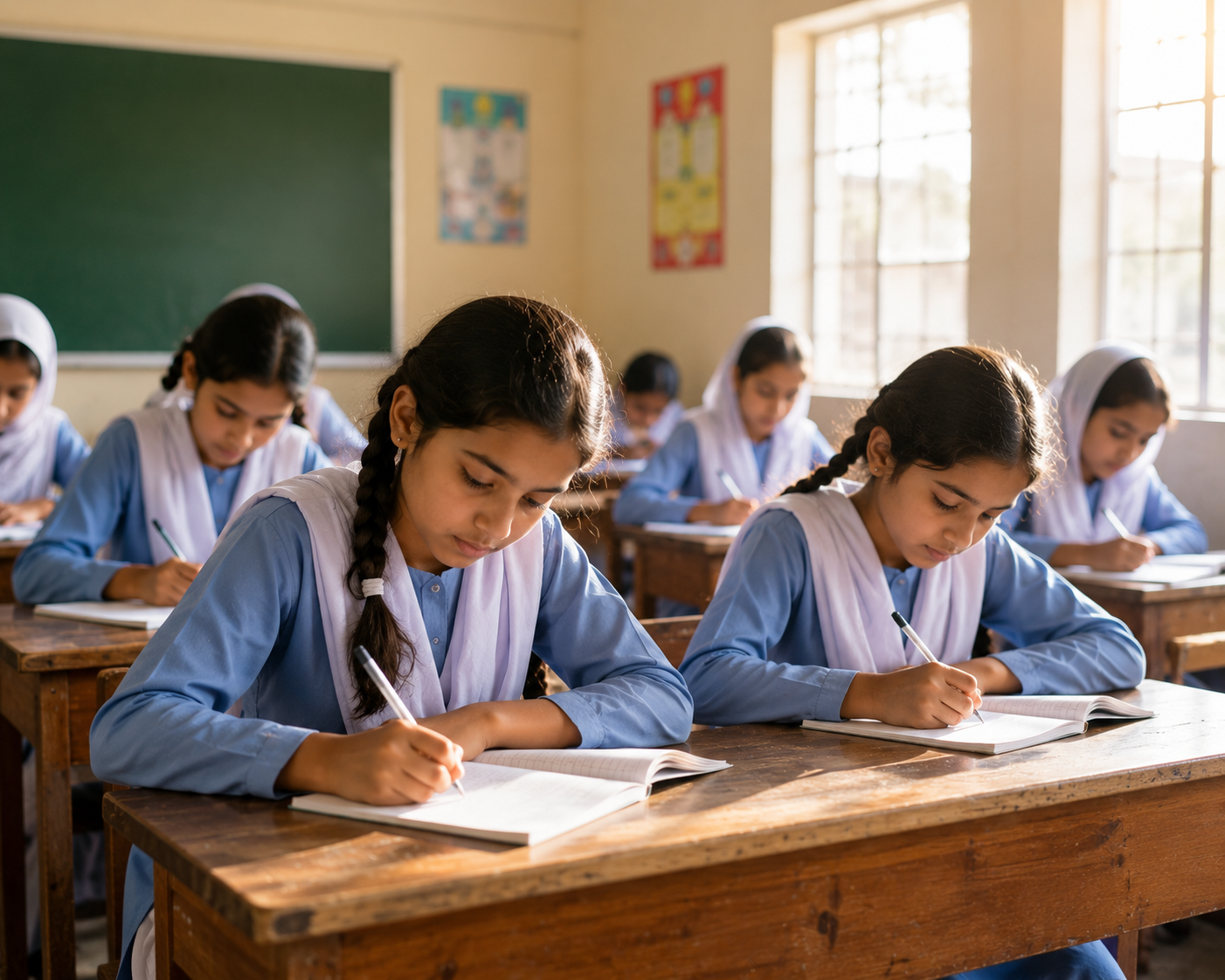
Seeking knowledge is described in Islamic tradition as an obligation on every Muslim, without gender distinction. The Prophet Muhammad's own household included Aisha, a scholar whose interpretations of hadith and Islamic law are still cited by jurists today.
The gap in Pakistan today is not religious permission but access and infrastructure. National data shows an adult female literacy rate of roughly 53 percent, compared to 68 percent for men, and the disparity widens further in rural areas and tribal districts, where female literacy can fall into the single digits. Programs like the Ehsaas Education Stipend target this gap directly by paying families to keep daughters enrolled, working against poverty and distance to school rather than against religious restriction.
Marriage Age and Consent
Islamic teaching does not fix a specific numerical marriage age, instead requiring that a person have reached physical and mental maturity along with clear, informed consent. Applying that principle in a modern legal context is where Pakistani law has recently shifted.
In May 2025, Pakistan's Parliament passed the Islamabad Capital Territory Child Marriage Restraint Act, setting the minimum legal marriage age at 18 for both men and women within the capital territory, a change Pakistan's Federal Shariat Court had already ruled consistent with Islamic principles in 2023. Sindh set the same 18-year threshold back in 2013. Outside these regions, some provinces still permit marriage for girls as young as 16 under older legislation, which is why child marriage remains a live policy debate rather than a settled issue nationally.
Polygamy in Islam: What the Text Actually Says
Polygamy is one of the most frequently misunderstood topics tied to women in Islam. The Quran permits a man to marry up to four wives under a specific condition: he must treat each wife with complete fairness in time, financial support, and living arrangements. The same verse immediately adds that if a man fears he cannot do this justly, he should marry only one.
Many scholars read this verse in its historical context, revealed after a battle that left many widows and orphans without support, framing polygamy as a conditional allowance for social protection rather than an open entitlement. In practice, polygamy is far less common than assumed and is illegal or heavily regulated in several Muslim-majority countries. In Pakistan, a man must obtain written permission from his first wife and approval from a local arbitration council before remarrying.
Can Women Lead in Islam?
Leadership roles for women have historical precedent in Islamic tradition. Khadijah, the Prophet Muhammad's first wife, ran a successful trade business before their marriage. Aisha led troops and taught hadith to some of the most respected scholars of the following generation. In the political sphere, women have served as heads of state in several Muslim-majority countries in modern times, including Pakistan, Bangladesh, Indonesia, and Turkey.
Scholarly opinion is not unanimous on every leadership question, particularly around leading mixed-gender congregational prayer, where mainstream view holds that role for men. But outside specific ritual leadership, Islamic tradition includes clear examples of women leading in business, scholarship, and governance.
The Hijab: Guidelines and Purpose
The hijab is often the most visible marker associated with Muslim women, and also one of the most debated. Islamic guidance on modest dress applies to both men and women, though the specific requirements differ. For women, mainstream scholarly opinion holds that covering the hair and body, apart from the hands and face, fulfills the Quranic instruction on modesty found in Surah An-Nur and Surah Al-Ahzab.
The stated purpose is modesty and dignity in public interaction, not restriction of movement or education. Many women describe choosing the hijab as an active expression of faith and identity rather than an imposed limitation, while others in Muslim-majority societies choose not to wear it, reflecting the range of personal practice that exists even within agreement on the underlying religious guidance.
Conclusion
The status of women in Islam is often debated using cultural practice as if it were religious text, which blurs a distinction worth making clearly. Islamic teaching sets out rights to property, consent, and education long before many other legal systems did. Where the gap remains, it usually sits between what the text guarantees and what local custom allows. What part of this topic would you like to see covered in more depth?
Frequently Asked Questions
Question: Do women have inheritance rights in Islam?
Answer: Yes. The Quran guarantees fixed inheritance shares for daughters, wives, and mothers, a right they hold independently of any male relative.
Question: What is the legal marriage age for women in Pakistan?
Answer: It is 18 in Islamabad Capital Territory and Sindh. Other provinces currently permit marriage from age 16 under older legislation.
Question: Does Islam require polygamy?
Answer: No. Polygamy is a conditional allowance, not a requirement, and requires strict fairness between wives to be permissible.
Question: Can women hold leadership positions in Islam?
Answer: Yes, in business, scholarship, and governance, with historical precedent going back to the Prophet's own household.